
 NGI профайл
 Үйлдвэрлэлийн бааз
 үйлчилгээ
 Гэрчилгээний


 AI серверийн тэжээлийн хангамж
 BMS/Зайны хамгаалалтын зөвлөл
 3С электроник
 Автомашины Электроникс
 Цэвэр эрчим хүч үйлдвэрлэх
 Эрчим хүчний агуулах
 Хагас дамжуулагч / IC
 Борлуулалтын дараах үйлчилгээ
 Мэдээллийн хуудас
 Бүтээгдэхүүний видео
 Хэрэглэгчийн заавар
 Харилцааны протокол
 Програм хангамж ба драйвер
 Програмын
 тусламж
 Хэрэглээ
 Шинээр ирсэн
 Үзэсгэлэн худалдаа
 EN
EN
 CN
CN AR
AR FR
FR IT
IT JA
JA KO
KO PT
PT RU
RU ES
ES TR
TR
Диодын массын үйлдвэрлэлийн туршилтанд өндөр нарийвчлалтай эх үүсвэрийн тоолуур ашиглах
Диод нь хагас дамжуулагч материалаас (цахиур, селен, германий гэх мэт) хийсэн электрон төхөөрөмж юм. Энэ нь нэг чиглэлтэй дамжуулах чадвартай, өөрөөр хэлбэл диодын анод руу шууд хүчдэл хэрэглэх үед диод асаалттай байдаг. Анод ба катод руу урвуу хүчдэл өгөх үед диод унтарна. Диодыг өргөн ашигладаг. Ялангуяа янз бүрийн электрон хэлхээнд диодыг резистор, конденсатор, индуктор зэрэг бүрэлдэхүүн хэсгүүдтэй холбож, өөр өөр функцтэй хэлхээг үүсгэдэг бөгөөд энэ нь хувьсах гүйдлийг засах, модуляцлагдсан дохиог илрүүлэх, далайцыг хязгаарлах, хавчих зэрэг олон функцийг гүйцэтгэдэг. болон цахилгаан тэжээлийн хүчдэлийн хүчдэл тогтворжуулах. Нийтлэг радио хэлхээнд эсвэл бусад гэр ахуйн цахилгаан хэрэгсэл эсвэл үйлдвэрлэлийн хяналтын хэлхээнд диодын ул мөрийг олж болно.
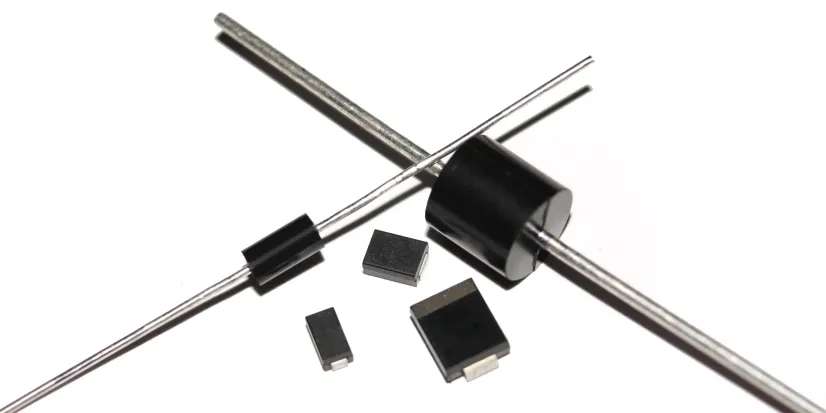
There is a big difference between the batch production test of diodes and the test of diodes under laboratory conditions. First, the batch size of industrial testing is large, and a test instrument tests tens of thousands of diodes on average every day. The price of packaged diodes in the global market is generally cheaper, and only large-scale production can achieve high throughput to make manufacturers profitable. Therefore, the instrument is required to achieve continuous and fast testing. Secondly, the test instrument is required to have a certain degree of versatility, be able to test various types of packaged diodes, and be able to change the type at any time. Third, it is required to apply voltage or current strictly in accordance with the test conditions to ensure a certain test accuracy. Therefore, the test system for packaged diodes is an integrated fully automatic system, which can complete a series of tasks from feeding, arranging, testing, silk-screening to packing of diodes. No manual intervention is required during the entire test.
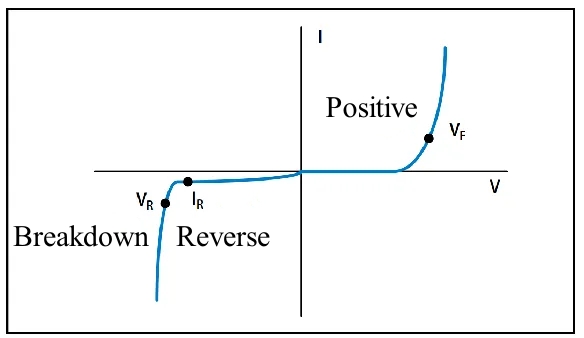
The diode test system consists of two parts. One part is the control machine (manipulator, fixture, conveyor, etc.), which mainly controls the entire process of diodes from feeding to packing. The other part is the NGI high-precision digital source meter, which is used to set the test conditions to test the main parameters of the diode such as the on-state voltage (VF), reverse breakdown voltage (VR) and leakage current (IR), and also has functions such as grading screening and arranging.
NGI N2600 series high-precision digital source meter works in four quadrants, integrating six functions of voltage source, current source, digital multi-meter (I/V/R measurement), and load. The measurement range covers 200V to 1μV, 1A to 10pA, 200MΩ to 10μΩ, and the measurement resolution reaches 6.5 digits. It has built-in scan mode, digital IO, limit test, synchronous trigger, signal generator, function calculator and other functions, and provides free standard PC control software, which is perfectly suitable for batch production test of packaged diodes.
N2600 series high-precision digital source meter table is equipped with 10 digital IO ports. The digital IO signal can be used to connect with the manipulator to control the manipulator to perform polarity test and grade screening on the diode. Diodes can be classified into product defect levels through electrical performance testing, which are generally divided into four levels: AAA, AA, A, and D. The defective products are eliminated by graded screening, and the manufacturer can ship according to customer needs. The output signal of each digital IO port of the source meter represents a kind of information, such as "good device", "damaged device", "rotating device", etc. The diode or diode package is placed in the test fixture and connected to the source meter output. Depending on the diode package, some diodes are photosensitive. To prevent harmful currents, a test environment chamber that can shield the diode from light is generally used. The source meter provides voltage bias or current bias to the diode and completes the measurement, compares the measurement result with the preset extreme value and makes a pass or fail judgment.
● Synchronous triggering test process of multiple source meters
1.The operator sends an operation instruction through the host computer by clicking the "Start Test" button, waiting for the conveyor and the robot and fixture to feed the diode production batch.
2.The host computer sends instructions through LAN to control the N2600 source meter to start working.
3.The source meter N2600 waits for the start test (SOT) trigger signal from the robot.
4.The robot sends the SOT trigger signal to the source meter N2600, indicating that all diodes are ready for synchronous testing.
5.Multiple source meters N2600 are synchronously triggered to perform polarity tests. If the diode polarity test is positive, then multiple source meters N2600 continue the functional test (step 6). If the diode polarity test is reverse, then send a digital IO signal to the robot to rotate the device and return to step 4. (When the polarity test is reverse, the device can also be rotated without rotation. Since the source meter N2600 works in four quadrants, the voltage and current output direction can be controlled by software to achieve the test, saving the operation time of the robot rotating the device)
6.When the diode polarity is positive, the source meter N2600 performs the diode functional test in the order indicated by the test running program, makes a qualified judgment and saves the data of each test.
7.The source meter N2600 sends a digital IO signal to the robot for grading and sorting, and sends an end of test (EOT) signal to the robot for boxing operation, and saves the product information data of each boxing.
8.Wait for the next batch of diode feeding test and automatically repeat the above test steps.